Ever send a "strategic update" and get manager replies like "TL;DR, what do I tell my team?"
That reaction is rarely about disengagement. It is decision overload surfacing at the exact point where internal communication tends to fail.
Most organisations are asking employees to process constant change. Reorganisations, new systems, updated policies, and personalised learning journeys arrive without anything being removed. When every message carries equal urgency, people stop distinguishing what matters. Managers feel this first, acting as human filters for unclear or overly dense communication.
What cuts through in these moments is not more information. It is fewer decisions paired with stronger creative anchors. Specific touchpoints that help people understand what matters, how it affects them, and what to do next without increasing cognitive load. This is where internal communication, employee experience, and creative execution intersect in a way that actually changes outcomes.
This is the thinking behind Octily’s Creative work. Rather than building broad campaigns, the focus is on shaping high impact moments across the employee journey. Creative is used to simplify complexity, humanise communication, and earn attention where it actually matters.
Where People Start to Switch Off
| Moment | Who Owns It | Creative Fix | What It Delivers |
|---|---|---|---|
Day 1:“Am I gonna fit here?” |
HR and Internal Brand | Video + Photography | A 90 second real team reel with five peers sharing honest Day 1 mistakes. New hires forward it at home. Belonging without ten HR slides. |
Reorganisation or Policy Week:“How does this hit me?” |
Internal Comms and L&D | Content + Video | A raw two minute leader video acknowledging short term pain and long term intent, supported by peer voiceovers. Managers stop emailing for clarity. |
Learning Win:“Was that worth my time?” |
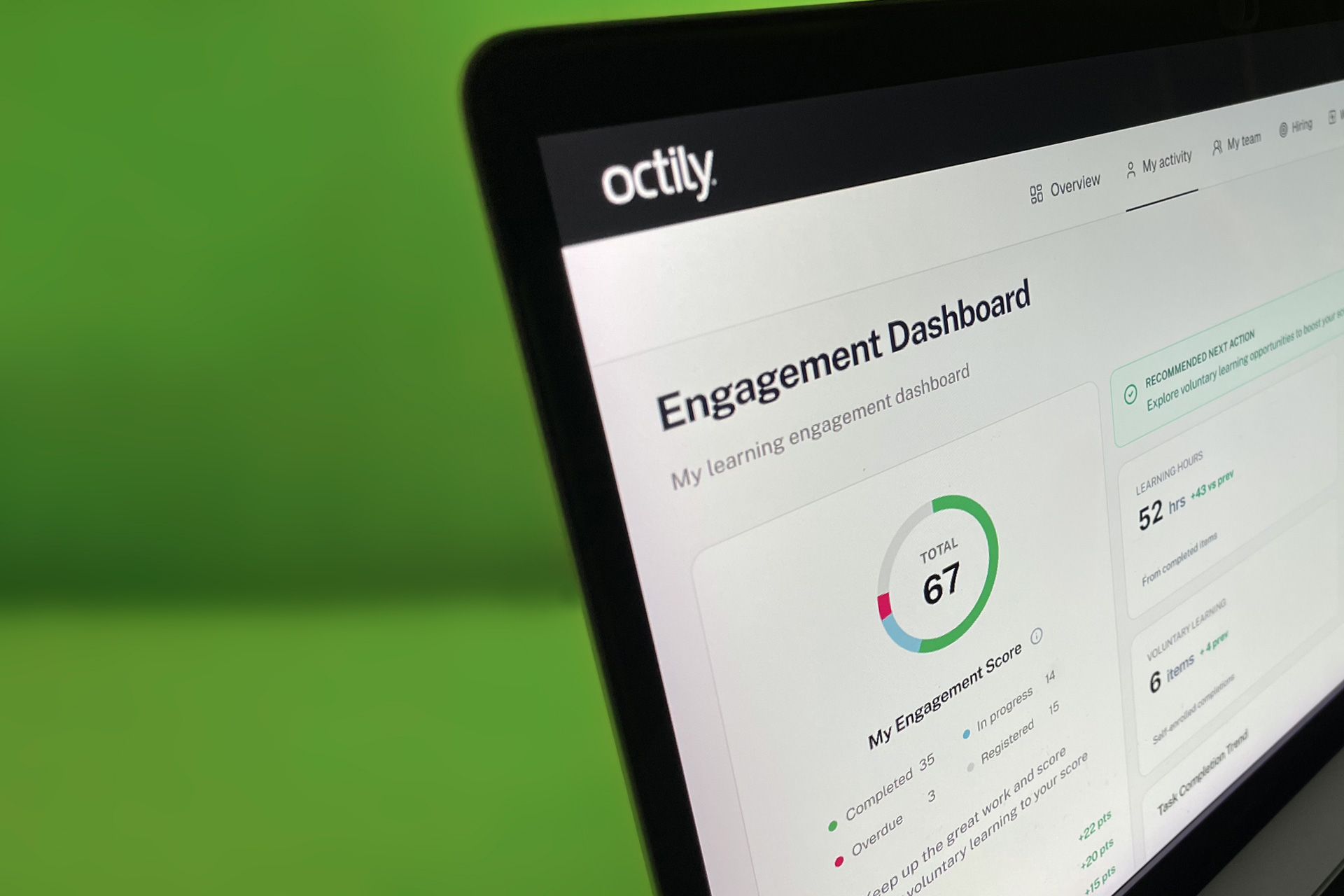
L&D and Engagement | Design + Photography | A skill unlocked card inside Cornerstone showing the employee photo and one line on how the skill was used in real work. Employees screenshot and share it. |
Promotion Block:“Where do I go next?” |
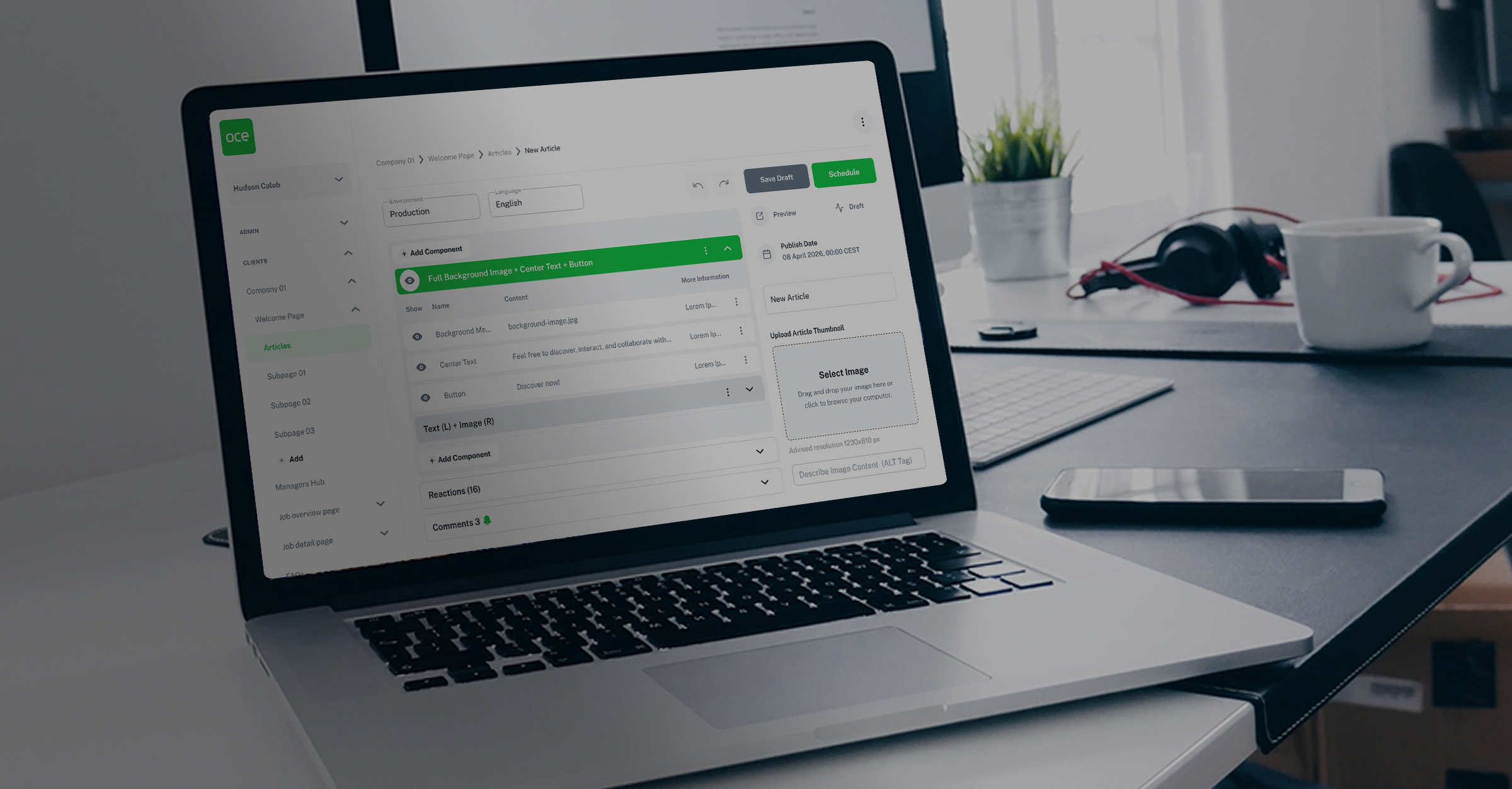
HR and Engagement | Branding + Development | Custom “Your Next Move” career hub—filterable paths by role/team with peer success stories. Internal moves increase; exit interviews drop “no growth path.” |
What People Are Really Deciding in These Moments
The first day is not about onboarding, it is about belonging
Onboarding overload shows up immediately, but it is rarely about systems or policies. New hires are trying to understand whether they belong and whether people like them succeed here. When onboarding relies heavily on documents and presentations, it increases anxiety rather than confidence.
Video and photography featuring real employees change this dynamic. Honest stories about early mistakes and learning curves create psychological safety and reduce the pressure to perform. When people recognise themselves in others, trust forms faster and engagement follows naturally.
When change hits, people look for truth, not reassurance
During reorganisations or policy changes, employees scan every message for personal impact. When language feels vague or overly optimistic, speculation fills the gaps and managers are pulled into the role of interpreters.
Short, direct leader videos that acknowledge discomfort while explaining intent build credibility. When these are reinforced by peer voices that translate strategy into everyday reality, confusion drops and alignment improves. People may not welcome the change, but they understand it, which is what allows momentum to return.
Learning only matters if it survives Monday morning
Learning fatigue is often misread as apathy. More often, it is a reaction to delayed relevance. When employees complete training without seeing how it connects to their work, the experience feels transactional and forgettable.
Design led proof points that show real application close this gap. Visual artefacts that highlight how a skill was used in practice turn learning into something concrete and socially validated. This sustains completion rates and improves recall well beyond the course itself.
Growth stalls when the next step is invisible
Promotion friction rarely shows up as dissatisfaction at first. It shows up as uncertainty. People do not know what options exist, what skills they need next, or whether progression is realistic for someone like them.
Career hubs that combine clear role pathways with peer stories remove that fog. When employees can explore how others moved internally, what steps they took, and where they landed, growth becomes tangible rather than theoretical. This clarity drives internal mobility and reduces the quiet frustration that often precedes attrition.
The Pattern That Keeps Repeating
Across internal communication, employee experience, and learning, the evidence points in the same direction. Visual storytelling and human voices build trust faster than text heavy updates, particularly in hybrid environments. Stock imagery undermines credibility, while authentic photography and unscripted video strengthen it.
Change videos reduce support queries, peer led photo stories double intranet engagement, and well built internal hubs continue delivering value months later without constant redesign. These are creative assets with operational impact, not disposable content.
This work has been delivered for organisations such as OlyBet, where internal news hubs and story driven content were not only published but shared and reused across teams. That reuse is often the clearest signal that a message has cut through.
The Work Is Smaller Than You Think
When internal communication starts to struggle, the instinct is to go bigger. More content, more channels, more alignment sessions. In reality, overload is rarely solved by scale. It is solved by removing friction at the exact point where people are already stuck.
Teams that make progress do not try to fix everything at once. They identify the moment where confusion is costing the most time, trust, or energy and they fix that properly. One unclear reorganisation message. One onboarding experience that creates anxiety instead of confidence. One learning programme that never quite lands.
The focus is on pinpointing the moment carrying the most weight and shaping creative around how people actually think and feel in that situation. Strategy, storytelling, production, and delivery work together so the result is usable, not theoretical.
When one moment works, everything downstream becomes easier. Managers stop translating. Employees stop second guessing. Content gets reused instead of rewritten. Clarity compounds.
If you are seeing confusion during change, fatigue during learning, or disengagement during onboarding, the answer is not another update. It is fixing the moment where things first start to wobble.
Let’s find that moment and make it hold.
Get in touch, send an email, or book a meeting. We would love to explore what we can create together.